Bilgilendirme: Kurulum ve veri kapsamındaki çalışmalar devam etmektedir. Göstereceğiniz anlayış için teşekkür ederiz.
 

Ağaşcıoğlu, Eda Akkız

Loading...
Profile Picture
Name Variants
Agascioglu, Eda
Job Title
Öğr. Gör.
Email Address
Main Affiliation
Lisansüstü Eğitim Enstitüsü
Status
Former Staff
Website
ORCID ID
Scopus Author ID
Turkish CoHE Profile ID
Google Scholar ID
WoS Researcher ID

Sustainable Development Goals

SDG data is not available
This researcher does not have a Scopus ID.
This researcher does not have a WoS ID.
Scholarly Output

1

Articles

1

Views / Downloads

5/0

Supervised MSc Theses

0

Supervised PhD Theses

0

WoS Citation Count

4

Scopus Citation Count

4

WoS h-index

1

Scopus h-index

1

Patents

0

Projects

0

WoS Citations per Publication

4.00

Scopus Citations per Publication

4.00

Open Access Source

0

Supervised Theses

0

Google Analytics Visitor Traffic

JournalCount
Biogerontology1
Current Page: 1 / 1

Scopus Quartile Distribution

Competency Cloud

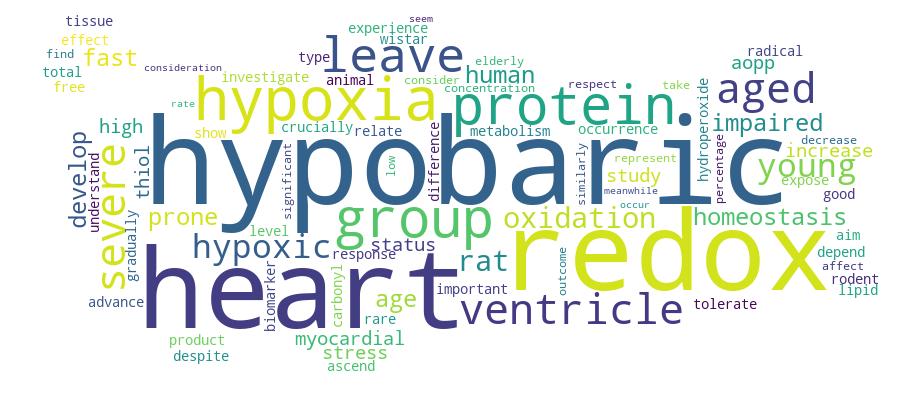
GCRIS Competency Cloud

Scholarly Output Search Results

Now showing 1 - 1 of 1
  • Article
    Citation - WoS: 4
    Citation - Scopus: 4
    Impaired Redox Homeostasis in the Heart Left Ventricles of Aged Rats Experiencing Fast-Developing Severe Hypobaric Hypoxia
    (Springer, 2019) Agascioglu, Eda; Colak, Ridvan; Demirel, Haydar; Cakatay, Ufuk
    Despite its rare occurrence, humans and animals have been prone to getting fast developing severe hypobaric hypoxia. Understanding the redox homeostasis related response of an aging heart to this type of hypoxia are crucially important, since the metabolism of myocardial tissue depends on the redox status of proteins. Rodents can tolerate hypoxic stress better than human subjects. This study was aimed at investigating the effects of fast developing severe hypobaric hypoxia on redox status biomarkers; such as, advanced oxidation protein products (AOPP), lipid hydroperoxides (LHPs), protein carbonyl groups (PCO), protein thiol groups (P-SH), and total thiol groups (T-SH) on the myocardial left ventricles of young and aged Wistar rats. The rats were gradually ascended and exposed to an 8000-meter hypobaric hypoxia. While AOPP levels showed no difference, the TSH and PSH concentrations decreased, and the PCO and LHP increased in both of the hypoxic groups than the controls. The TSH and PSH were lower, and AOPP, PCO and LHP were found to be higher in the elderly hypoxic groups than in the young ones. The significant outcome of the study represents that an 8000-meter hypobaric hypoxia could be considered as a severe hypoxic stress, but not life-treating for the rats and would affect both the young and aged left ventricles similarly in respect to impaired redox status. However, if the percentage increases are taken into consideration, it seems that the higher rate of protein oxidation occurs in young hearts; meanwhile aged hearts are more prone to T-SH oxidation.