Bilgilendirme: Kurulum ve veri kapsamındaki çalışmalar devam etmektedir. Göstereceğiniz anlayış için teşekkür ederiz.
 

Akcan, Sumruhan

Loading...
Profile Picture
Name Variants
Job Title
Arş. Gör.
Email Address
Main Affiliation
İç Mimarlık
Status
Former Staff
Website
ORCID ID
Scopus Author ID
Turkish CoHE Profile ID
Google Scholar ID
WoS Researcher ID

Sustainable Development Goals

SDG data is not available
This researcher does not have a Scopus ID.
This researcher does not have a WoS ID.
Scholarly Output

1

Articles

0

Views / Downloads

328/11

Supervised MSc Theses

1

Supervised PhD Theses

0

WoS Citation Count

0

Scopus Citation Count

0

WoS h-index

0

Scopus h-index

0

Patents

0

Projects

0

WoS Citations per Publication

0.00

Scopus Citations per Publication

0.00

Open Access Source

0

Supervised Theses

1

Google Analytics Visitor Traffic

Journals data is not available

Scopus Quartile Distribution

Quartile distribution chart data is not available

Competency Cloud
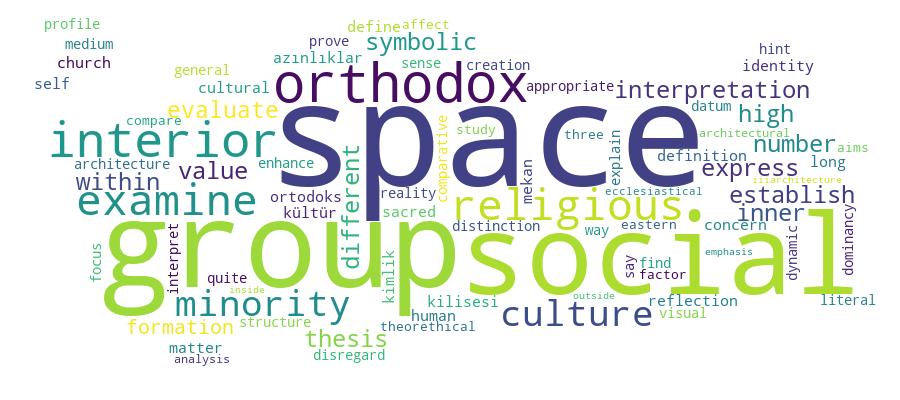
GCRIS Competency Cloud

Scholarly Output Search Results

Now showing 1 - 1 of 1
  • Master Thesis
    Cultural reflections in the Orthodox sacred space
    (2003) Akcan, Sumruhan
    The definitions of self by human beings have been a matter of interpretation concerning space for a long time. Space can be defined as an appropriate media for a social group to explain itself and its distinctions from other groups disregarding the dominancy of the number of members. These social groups, while finding ways to express themselves, establish their religious architecture within their inner dynamics. While doing so, they use their established profile in all of their creations. In this sense, it can be said that when examining a social group, the focus should be on those spaces with a high symbolic value for expressing themselves as being different from the others. In general, the religious space has a high symbolic value, with quite a number of social hints within. This thesis is based on a comparative structure which evaluates and proves this reality while interpreting the inner dynamics of space creation, as visual and literal data enhances the theorethical basis. This study examines the factors affecting the formation of the religious interiors of the Eastern Orthodox minority groups in Anatolia. It aims to compare and evaluate the interpretation of interiors by three different social groups, examining their socio-cultural and architectural position. The thesis analyses the formation of their ecclesiastical IIIarchitecture and culture using the space in the outside and the inside, but with an emphasis on the space within