
Tunçer, Mehmet
Loading...
Profile URL
Name Variants
Tuncer, Mehmet
TUNÇER, Mehmet
Tunçer, M.
TUNÇER, Mehmet
Tunçer, M.
Job Title
Prof. Dr.
Email Address
mtuncer@cankaya.edu.tr
Main Affiliation
05.03. Şehir ve Bölge Planlama
Şehir ve Bölge Planlama
05. Mimarlık Fakültesi
01. Çankaya Üniversitesi
Şehir ve Bölge Planlama
05. Mimarlık Fakültesi
01. Çankaya Üniversitesi
Status
Current Staff
ORCID ID
Scopus Author ID
Turkish CoHE Profile ID
Google Scholar ID
WoS Researcher ID
Files
Sustainable Development Goals
13
CLIMATE ACTION

0
Research Products
8
DECENT WORK AND ECONOMIC GROWTH

2
Research Products
3
GOOD HEALTH AND WELL-BEING

0
Research Products
15
LIFE ON LAND

5
Research Products
17
PARTNERSHIPS FOR THE GOALS

1
Research Products
14
LIFE BELOW WATER

3
Research Products
4
QUALITY EDUCATION

0
Research Products
11
SUSTAINABLE CITIES AND COMMUNITIES

12
Research Products
6
CLEAN WATER AND SANITATION

0
Research Products
10
REDUCED INEQUALITIES

1
Research Products
9
INDUSTRY, INNOVATION AND INFRASTRUCTURE

2
Research Products
12
RESPONSIBLE CONSUMPTION AND PRODUCTION

6
Research Products
2
ZERO HUNGER

1
Research Products
1
NO POVERTY

0
Research Products
7
AFFORDABLE AND CLEAN ENERGY

2
Research Products
5
GENDER EQUALITY

0
Research Products
16
PEACE, JUSTICE AND STRONG INSTITUTIONS

2
Research Products

This researcher does not have a Scopus ID.

This researcher does not have a WoS ID.

Scholarly Output
27
Articles
9
Views / Downloads
8332/12317
Supervised MSc Theses
1
Supervised PhD Theses
0
WoS Citation Count
0
Scopus Citation Count
3
WoS h-index
0
Scopus h-index
1
Patents
0
Projects
0
WoS Citations per Publication
0.00
Scopus Citations per Publication
0.11
Open Access Source
10
Supervised Theses
1
Google Analytics Visitor Traffic
| Journal | Count |
|---|---|
| GRID - Mimarlık Planlama ve Tasarım Dergisi | 2 |
| BetonArt Dergisi | 1 |
| Design Strategies for Green/Energy-Efficient Building Design: An Apartment Building in the Gaziantep Project | 1 |
| Doğal çevre yok olurken | 1 |
| Doğanın Sesi | 1 |
Current Page: 1 / 5
Scopus Quartile Distribution
Quartile distribution chart data is not available
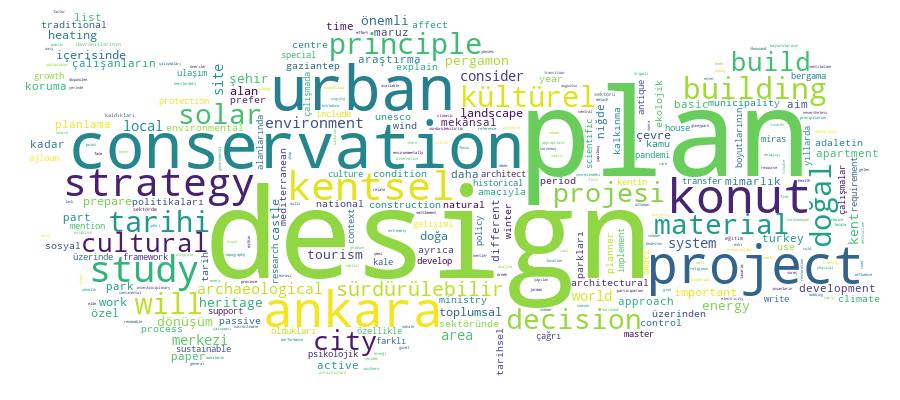
Competency Cloud
27 results
Scholarly Output Search Results
Now showing 1 - 10 of 27
Conference Object Book Part Citation - Scopus: 2Design Strategies for Green/Energy-efficient Building Design: an Apartment Building in the Gaziantep Project(Springer International Publishing, 2020) Yazıcıoğlu, M.; Tunçer, M.; Çelebi, G.The aim of this study is to introduce the energy-efficient architectural design strategies of a project which has been supported by the Turkish Ministry of Environment and Urbanization. This project has not yet been implemented, and the construction process and material choices have not been finalized. Nevertheless, it was considered important to share the design strategies and decisions. The location of the project is in Gaziantep City. The city is located in the southern part of Turkey. Some parts of the province, situated at the transition point of the Mediterranean and continental climate, are influenced by the Mediterranean climate. However, in general, summers are extremely hot and dry, and the winters are cold and rainy. Rare precipitation is most common in winter and spring. In the project, both in planning and architectural designing, the climatic and environment conditions were considered as a basic guider. Five principles were used in the design approach: “green/energy-efficient”, “buildings with identity”, “smart”, “safety”, and “human oriented”. For every principle, different strategies have been analysed and studied. In this study, only the design decisions for a green/energy-efficient building will be presented. While considering the principles and design decisions, strategies will be explained with references from scientific studies. In the green/energy-efficient design approach, the decisions transferred to the physical environment focused on the use of “passive systems”, “active systems”, and “resource conservation and local material use”. In passive solar system, principles such as “natural ventilation and wind control”, “sun control and natural daylighting”, “green roof”, and “envelope design and insulation” are considered and analysed. Solar heating is preferred during heating periods, and wind energy is preferred during cooling periods. Active solar systems were used during the seasons when the requirements were not met. Among the renewable energy sources, it is deemed appropriate to produce electricity from the sun (PV), which is the easiest way to reach and use alternative energy sources. Sun collectors in water heating were used. Also, these systems are integrated into the buildings. The basic approaches that affect the environmental performance of the building are to use local materials and to read the topography and microclimate conditions correctly. One of the most important factors affecting the shaping of the traditional buildings is the surrounding resources. In the construction of buildings, to use materials with the most sustainable resources available in the environment was proposed. Within the context of the principles and strategies mentioned above, projects have been prepared for buildings with different functions. Four- to five-storey apartments, detached houses, religious buildings, educational buildings, cultural centre, health centre, and traditional shopping malls were designed, which are related to planning and landscape principles. In this study, an apartment building will be presented with visual materials from project. © Springer Nature Switzerland AG 2020.Article Doğa Parkları Tasarım İlkeleri(2019) Tunçer, MehmetDoğa Parkları; doğanın ekolojik döngüsüne müdahalede bulunmadan, tamamen doğal malzeme ve çevreye uyumlu mimari kullanılarak, mutlak koruma alanları dışında oluşturulan “Aktif Kullanım Alanları” nın kamusal amaçlarla düzenlenmesidir. Doğa Parkları Tasarım İlkeleri, İstanbul Elmalı Barajları Doğa Parkı Projesi için elde edilen kaynaklardan yararlanılarak hazırlanmıştır. Bu yazının günümüzde birçok kentte oluşturulmaya başlanan “Millet Bahçeleri” için, özellikle doğal karakteri korunmuş doğa parçalarında planlama, projelendirme ve uygulamaya da bir rehber niteliğinde olması amaçlanmaktadır.Book Tarihsel Çevre Koruma Politikaları Ankara(Net Kitaplık Yayıncılık, 2021) Tunçer, MehmetBook Part Bir Su Şehri (Water City) Projesi (Venedik II/Gedizkent Örneği)(2020) Tunçer, MehmetArticle Libya'da Sürdürülebilir Konut Politikası: Tripoli Örnek Alan Çalışması(2020) Alameen, Omar; Celebı, Gülser; Tuncer, MehmetBir çok toplumda; mimarlar, altyapı mühendisleri ve şehir plancıları gibi uzmanlar, insanların zamanlarının çoğunu geçirdiği mekan olarak konutun, gelişimi için önemli olan sürdürülebilir konutlara özel bir önem verirler. Libya’da da konut binaları Libya'daki herhangi bir kentin toplam alanının % 50'sinden fazlasını kapsamaktadır. Bu çalışmada alan incelemesi olarak Libya’nın Trablusgarp şehri ele alınmıştır. 1970'lerde yüksek petrol fiyatları nedeniyle şehrin büyümesi artmıştır. Sonuç olarak, komşu şehirlerden göçün yanı sıra doğal nüfus artışında da bir artış olmuştur. Nüfus artışına uyum sağlamak için, hükümetler özellikle konut sektöründe bir dizi kalkınma projesi gerçekleştirmiştir. Bu çalışmanın amacı da, farklı kalkınma projelerindeki konut politikaları bağlamında konut kullanıcılarının memnuniyetini değerlendirmektir. Veriler anketler yoluyla elde edilmiştir. Bu anketlerde konut sakinlerinin sosyal durumlarına göre konutların bugün ve gelecekte Libya ailesine uygunluğu sorgulanmıştır. Ayrıca, gelecekteki konut projelerini uygularken hangi özelliklerin dikkate alınması gerektiği sorusu da anketlerde sorulmuştur. Çalışmada, “Sürdürülebilir Konut” ilkelerini uygulamak üzere oluşturulmuş konut projeleri üzerinden kullanıcıların memnuniyetini değerlendirmek amacıyla da sorgulama yapılmaktadır. Örnekler, Trablusgarp'ta dört farklı alandaki konut projelerini içermektedir. Bu alanlar: (i) Havaalanı Yolu Doğu Konut Projesi (ii) Al Hadba Khdra Konut Projesi (iii) Ghot Ash-Ahaal Konut Projesi (iv) Souq-Atolata (Kuzey) Konut Projesi. Çalışma aynı zamanda, Trablusgarp ve Libya'da, sosyal sürdürülebilirlik prensiplerini konutta uygulamak amacıyla “Libya'da Sürdürülebilir Konut Politikası: Tripoli Örnek Alan Çalışması”nın sonuçlarından da yararlanmayı amaçlamaktadır. Ayrıca, bu makalenin planlama ve mimarlık profesyonelleri için de faydalı olacağı düşünülmektedir.Book Güzel Şehir İlkeleri:kardeş şehir Roma-Ankara(2023) Tunçer, MehmetBook Part Energy Efficient Building Design Ana-Maria Dabija(Springer, 2020) Çelebi, Gülser; Yazıcıoğlu, Mine; Tunçer, MehmetThe aim of this study is to introduce the energy-efficient architectural design strategies of a project which has been supported by the Turkish Ministry of Environment and Urbanization. This project has not yet been implemented, and the construction process and material choices have not been finalized. Nevertheless, it was considered important to share the design strategies and decisions. The location of the project is in Gaziantep City. The city is located in the southern part of Turkey. Some parts of the province, situated at the transition point of the Mediterranean and continental climate, are influenced by the Mediterranean climate. However, in general, summers are extremely hot and dry, and the winters are cold and rainy. Rare precipitation is most common in winter and spring. In the project, both in planning and architectural designing, the climatic and environment conditions were considered as a basic guider. Five principles were used in the design approach: “green/energy-efficient”, “buildings with identity”, “smart”, “safety”, and “human oriented”. For every principle, different strategies have been analysed and studied. In this study, only the design decisions for a green/energy-efficient building will be presented. While considering the principles and design decisions, strategies will be explained with references from scientific studies. In the green/energy-efficient design approach, the decisions transferred to the physical environment focused on the use of “passive systems”, “active systems”, and “resource conservation and local material use”. In passive solar system, principles such as “natural ventilation and wind control”, “sun control and natural daylighting”, “green roof”, and “envelope design and insulation” are considered and analysed. Solar heating is preferred during heating periods, and wind energy is preferred during cooling periods. Active solar systems were used during the seasons when the requirements were not met. Among the renewable energy sources, it is deemed appropriate to produce electricity from the sun (PV), which is the easiest way to reach and use alternative energy sources. Sun collectors in water heating were used. Also, these systems are integrated into the buildings. The basic approaches that affect the environmental performance of the building are to use local materials and to read the topography and microclimate conditions correctly. One of the most important factors affecting the shaping of the traditional buildings is the surrounding resources. In the construction of buildings, to use materials with the most sustainable resources available in the environment was proposed. Within the context of the principles and strategies mentioned above, projects have been prepared for buildings with different functions. Four- to five-storey apartments, detached houses, religious buildings, educational buildings, cultural centre, health centre, and traditional shopping malls were designed, which are related to planning and landscape principles. In this study, an apartment building will be presented with visual materials from project.Conference Object Citation - Scopus: 1Urban Conservation Policies and Plans for a World Heritage Site Case: Antique Pergamon City and Its Multi-Layered Cultural Landscape(Iop Publishing Ltd, 2017) Tuncer, MehmetIzmir's Pergamon (Bergama) Antique City and Its Multi-Layered Cultural Landscape entered the UNESCO World Heritage List with the participation of 21 countries in the 38th World Heritage Committee Meeting held in Doha, Qatar's capital in between 15 - 25 June 2014. Bergama became the 999th WORLD HERITAGE. Bergama, which has been in operation since 2010, has entered the list as a Multi-layered Cultural Landscape Area. The main purpose of this paper will explain and summarize of urban and archaeological conservation efforts for Pergamon since 1992 to 2014. In the paper also aimed to give the conservation policies of public administrations which mainly central /Ministry of Culture and Tourism, Ministry of Environment/ and local /Bergama Municipality, Gen. Directorate of Vakiflar. Turkey is one of the 10 original member states to establish UNESCO. 9 cities in Turkey are included in the UNESCO List of World Heritage Sites. Further, 23 sites have been nominated and are included in the tentative list. The activities aimed to include the district of Bergama in the UNESCO World Heritage List are ongoing in the years 2009-2014. All the efforts have been made carry this unique antique city to the UNESCO Heritage List at 2014. As an Urban Conservation Planner, I had a change of preparing the FIRST Conservation Aimed Plans and urban designs for Urban and Archaeological Sites of Pergamon together with my team, in the years between 1992-94. We prepared conservation aimed plans for all of the areas of Acropolis, Middle City and Ottoman period urban conservation areas. Urban and archaeological sites of Pergamon the ancient city today, which is over two thousand years old, where scientists, archaeologists, architects, art historians, urban planners, sculptors and similar arts and culture, men talk about admiration, write about and write praises, face to face some deterioration and destruction. As a conservation planner working on Pergamon since 1992, I' will concentrate the following results and conclusions; 1. Urban and Archaeological Sites in Turkey are generally in danger of destruction because of lack of public awareness and lack of sufficient monetary funds and administrative organisations. 2. In the Case Pergamon; this problem mentioned above are already defeated by the local and central governmental bodies. Unfortunately this success costs time and money, as well as more losess in the urban and archaeological areas. Especially loss in old Ottoman Houses and open archaeological sites. 3. The Paper will be aim to handle the governmental policies about the conservation, the inefficiencies in planning and approval of conservation aimed plans.Article Ulus Meydanı Çevresindeki Yapılara Yönelik Planlama Çalışmaları(2018) Tunçer, Mehmet

- «
- 1 (current)
- 2
- 3
- »