
Ghoroubı, Rahim
Loading...

Profile URL
Name Variants
Ghoroubi, Rahim
Job Title
Dr. Öğr. Üyesi
Email Address
Main Affiliation
İnşaat Mühendisliği
Status
Former Staff
Website
ORCID ID
Scopus Author ID
Turkish CoHE Profile ID
Google Scholar ID
WoS Researcher ID
Sustainable Development Goals

This researcher does not have a Scopus ID.

This researcher does not have a WoS ID.
Google Analytics Visitor Traffic
| Journal | Count |
|---|
Current Page: 1 / NaN
Scopus Quartile Distribution
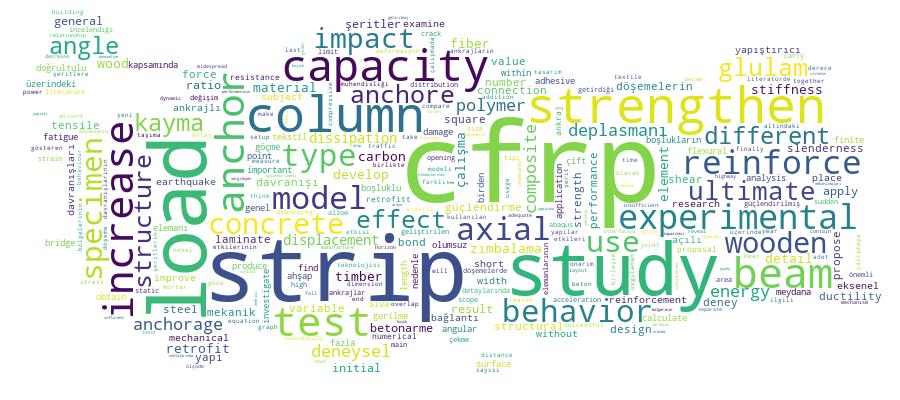
Competency Cloud
13 results
Scholarly Output Search Results
Now showing 1 - 10 of 13
Article Ahşap Bağlantı Noktalarında Mekanik Ankraj Sayısı ve Yerleşim Şeklinin Kayma Gerilmesi-kayma Deplasmanı Davranışı Üzerindeki Etkilerinin Deneysel Olarak İncelenmesi(2021) Acehan, Ayşegül Özden; Mercimek, Ömer; Ghoroubi, Rahim; Anıl, ÖzgürAhşap yapılar ve yapı elemanlarında yapıştırıcı ve mekanik bağlantı elemanları ile bir araya getirilmiş birleşim bölgerinin genel yük-deplasman davranışı, kayma gerilmesi- kayma deplasmanı davranışları, yapısal sistemin kapasitesi ve göçme mekanizmaları üzerinde son derece etkilidir. Ahşap-ahşap bağlantı bölgelerinin davranışları, malzemenin mekanik özelliklerine, yapısına ve türüne göre çok büyük oranda değişim gösteren farklı kayma gerilmesi-kayma deplasmanı davranışları sergileyen, incelenmesi gerekli olan önemli bir konudur. Ahşap yapı elemanlarının yapıştırıcı ve yapıştırıcı ile birlikte mekanik ankrajlar ile birleştirilmesi durumunda genel yük-deplasman davranışlarının, bağlantı bölgesindeki gerilme dağılımları ile kayma gerilmesi - kayma deplasmanı davranışlarının incelendiği kapsamlı bir deneysel çalışmaya literatürde rastlanmamıştır. Bu nedenle deneysel bir çalışma planlanmıştır. Bu çalışma kapsamında birbirlerine yapıştırıcı ve yapıştırıcı ile birlikte mekanik ankrajlar ile bağlanmış olan, kenetlenme uzunlukları 180, 240 ve 350 mm olarak değişim gösteren ahşap bağlantı bölgelerinin, eksenel çekme yükü etkisi altındaki genel yük deplasman davranışları deneysel olarak incelenmiştir. Ayrıca çalışma kapsamında birleşim bölgesinde kullanılan mekanik ankraj sayısı ve yerleşiminin değişim göstermesinin, genel yük-deplasman davranışı ve kayma gerilmesi-kayma deplasmanı davranışları üzerindeki etkileri de araştırılmıştır.Article Açılı Cfrp Ankrajlı Şeritler ile Beton Yüzey Arasındaki Gerilme Deformasyon Davranışı için Yeni Bir Model Önerisi(2020) Özgür, A. C. Anıl; Ghoroubi, Rahim; Mercimek, ÖmerBetonarme, çelik veya yığma yapılar birçok farklı nedenden dolayı güçlendirilmeleri veya onarılmaları gerekmektedir. Karbon takviyeli elyaf kumaşlar (CFRP) deprem performansı yetersiz yapıların onarım ve güçlendirme çalışmalarında son 20 yıldır yaygın olarak kullanılmaktadır. CFRP ile geliştirilen onarım ve güçlendirme detaylarında önemli olan tasarım kriterlerinden biri CFRP elemanların yüzeyden soyulmalarını geciktirmektir. Bu amaçla CFRP ile geliştirilen güçlendirme detaylarında ankrajların kullanılması artış göstermiştir. Güçlendirme detaylarında kullanılan fan tipi CFRP ankrajlı CFRP şeritler ile ilgili gerilme-kayma deplasmanı modellerinin ankrajsız CFRP şeritlere göre çok daha sınırlı sayıda olduğu görülmektedir. Bu konudaki sınırlı sayıdaki çalışmada ankrajlar CFRP şeritlere uygulanan eksenel çekme kuvvetine göre 90o açılı olacak şekilde yerleştirilmiştir. Yapılan literatür taramasında eksenel yüke göre değişik açılarda yerleştirilen ankrajlı CFRP şeritlerin eksenel kuvvet taşıma gücü ve gerilme kayma deplasmanı modelleri ile ilgili bir çalışmaya rastlanmamıştır. Bu nedenle deneysel bir çalışma düzenlenmiş ve 28 adet beton yüzeyine yapıştırılan açılı ankrajlı CFRP şerit deney elemanı eksenel çekme kuvveti etkisinde yazarlar tarafından tasarlanan bir deney düzeneği kullanılarak test edilmiştir. Deneysel çalışmada incelenen değişkenler CFRP şerit genişliği ve CFRP şeritler üzerindeki CFRP fan tipi ankrajların açılarıdır. Deneysel çalışma sonucunda açılı ankrajlı CFRP şeritlerin maksimum taşıma gücü değerlerinin hesaplanması için bir denklem ve yeni bir gerilme kayma deplasmanı modeli önerilmiştir.Article Citation - WoS: 14Citation - Scopus: 17Experimental and Numerical Investigation of Rc Column Strengthening With Cfrp Strips Subjected To Low-Velocity Impact Load(Techno-press, 2021) Mercimek, Omer; Anil, Ozgur; Ghoroubi, Rahim; Sakin, Shaimaa; Yilmaz, TolgaReinforced concrete (RC) square columns are vulnerable to sudden dynamic impact loadings such as the vehicle crash to the bridges of highway or seaway, rock fall, the collision of masses with the effect of flood and landslide. In this experimental study RC square columns strengthened with and without CFRP strip subjected to sudden low velocity lateral impact loading were investigated. Drop-hammer testing machine was used to apply the impact loading to RC square columns. The test specimens were manufactured with square cross sections with 1/3 geometric scale. In scope of the study, 6 test specimens were manufactured and tested. The main variables considered in the study were the application point of impact loading, and CFRP strip spacing. A 9.0 kg mass was allowed to fall freely from a height of 1.0 m to apply the impact loading on the columns. During the impact tests, accelerations, impact force, column mid-point displacements and CFRP strip strains measurements were taken. The general behavior of test specimens, collapse mechanisms, acceleration, displacement, impact load and strain time relationships were interpreted, and the load displacement relationships were obtained. The data from the experimental study was used to investigate the effect of variables on the impact performances of RC columns. It has been observed that the strengthening method applied to reinforced concrete columns, which are designed with insufficient shear strength, insufficient shear reinforcement and produced with low strength concrete, using CFRP strips significantly improves the behavior of the columns under the effect of sudden dynamic impact loading and increases their performance. As a result of the increase in the hardness and rigidity of the specimens strengthened by wrapping with CFRP strips, the accelerations due to the impact loading increased, the displacements decreased and the number of shear cracks formed decreased and the damage was limited. Moreover, the finite element analyses of tested specimens were performed using ABAQUS software to further investigate the impact behavior.Article Citation - WoS: 10Citation - Scopus: 10Experimental Investigation of Bonding Behavior of Anchoraged Timber-To Joint(Springernature, 2021) Ghoroubi, Rahim; Mercimek, Omer; Sakin, Shaimaa; Anil, OzgurThe comprehensive experimental study examining the general load-displacement behavior, stress distributions and shear stress-shear-displacement behaviors in the connection area when wood structural elements are combined with adhesive or adhesive with mechanical anchorages have been found in very limited number of studies in the literature. Therefore, an experimental study was planned. In this study, the general load-displacement behavior of the timber connection regions which are connected by adhesive and mechanical anchorages together with adhesive, with varying lengths of 180, 240 and 350 mm are investigated experimentally. Besides, the effect of changing the number and location of mechanical anchorages used in the connection area on the general load-displacement behavior and shear stress-shear-displacement behavior was also investigated. Using the load-displacement graphs obtained as a result of the experimental study, a generalized material model is proposed for the shear stress-shear-displacement interfacial adhesion surface for wood-wood junction points. This material model, which is proposed for wood-wood connection points with mechanical anchors, is a model that can be useful and can be used in the analysis of structural systems containing such connections using finite element software. It is thought that the overall capacity and load-displacement behavior of structural systems containing such connection points can be calculated more realistically using the proposed interfacial material model.Article Citation - WoS: 16Citation - Scopus: 16Novel Bond-Slip Model Between Concrete and Angular Cfrp Fan Type Anchoraged Cfrp Strip(Taylor & Francis Ltd, 2022) Ghoroubi, Rahim; Mercimek, Omer; Sakin, Shaimaa; Anil, OzgurOne of the most important design approaches in the repairing/strengthening details is using CFRP (Carbon Fiber Reinforced Polymer) to delay the debonding of the CFRP strips/plates from the surface to take full advantage of the CFRP reinforcement. Compared to non-anchored strips, research studies regarding bond-slip models developed for fan type CFRP anchors and anchored CFRP strips to strengthen details are limited in the related literature review. However, in studies on this subject, anchors are placed at 90 degrees to the axial tensile force applied to the CFRP strips. The ultimate load-bearing capacity and bond-slip models of CFRP strips with the different angled CFRP fan type anchor under axial tensile force have not been found in the literature review. Within the study's scope, 28 angled CFRP strip test specimens were produced and then tested under the effect of monotonically increasing axial tensile force with an experimental setup designed by the authors. The variables examined in this study were the concrete compressive power, the CFRP strip's width, the number of the CFRP anchor fan type, and the angle of the anchor placed on the CFRP strip. As a result of the study, an equation was proposed for calculating the ultimate load-bearing capacity of angled anchored CFRP strips and angled anchored CFRP strips. Finally, a new proposal for the bond-slip model was developed. It is thought that the new interface bond-slip model developed for CFRP strips with different angles will make an important contribution to the literature. It can be used in finite element analysis to realistically analyze the capacities and load-displacement behavior of reinforced concrete structural elements by strengthening such strips.Article A New Novel Model Proposal For Bond-Slip Behavior Between Angular CFRP Fan Type Anchoraged CFRP Strip and Concrete Surface(2020) Ghoroubi, Rahim; Mercimek, Ömer; Anıl, ÖzgürIn the reinforced concrete, masonry or steel structures should be strengthened or repaired. Carbon fiber reinforced polymers (CFRP) have been widely used for the last 20 years for repairing and strengthening of inadequate earthquake performance of the structures. One of the most important developed design criteria in the retrofit and strengthening details are using CFRP to delay the debonding of the CFRP reinforcement elements. For this reason, the uses of anchors in the reinforcement details developed by using CFRP and also researches on this subject have increased substantially. In the literature, research on bond-slip models developed for fan type CFRP anchors and anchored CFRP strips used in reinforcement details are limited in comparison to non-anchored strips. However, in studies on this subject, anchors are placed at 90o to the axial tensile force applied to the CFRP strips. Axial force-bearing strength and bond-slip models of CFRP strips with the different anchored angle under axial tensile strengths have not been found in the literature. For this reason, an experimental study was carried out and 28 specimens of angled anchored CFRP strip test specimen, which was bonded to the concrete surface, was tested under the influence of axial tensile force with an experimental setup designed by the authors. The variables studied in the experimental study are the CFRP strip width and the fan type CFRP anchor angle placed on the CFRP strip. As a result of the experimental study, an equation was proposed for calculating the bearing strength values of angled anchored CFRP strips and a new proposal for the bond-slip model was developed.Article Birden Fazla Boşluklu Çift Doğrultulu Betonarme Döşemelerin Zımbalama Performansının İyileştirilmesi için Tekstil ile Güçlendirilmiş Sıva Şeritler ile Güçlendirilmesi(2021) Mercimek, Ömer; Ghoroubi, Rahim; Anıl, Özgür; Baran, MehmetBetonarme kirişsiz döşemelerde meydana gelebilecek olan ani ve gevrek bir şekilde, hiçbir deformasyon belirtisi göstermeden oluşan zımbalama göçme mekanizması yapı içerisinde yaşayanlara zarar verebilecek son derece tehlikeli bir göçme şeklidir. Bu nedenle tasarım aşamasında kaçınılan göçme mekanizmalarının başında gelmektedir. Betonarme döşemelerde havalandırma, elektrik veya dogalgaz gibi alt yapı sistemlerinin geçirilmesi veya merdiven ya da asansör boşluğu gibi mimari zorunluluklar nedeniyle bırakılan boşlukların, döşemelerin zımbalama dayanımını ve davranışını olumsuz etkilediği bilinmektedir. Ancak birden fazla boşluklu çift doğrultulu betonarme döşemelerin zımbalama yüklemesi etkisi altındaki davranışının incelendiği bir araştırmaya literatürde rastlanmamıştır. Bu nedenle betonarme çift doğrultulu döşemelerde birden fazla boşluğun döşemelerin zımbalama davranışı üzerindeki olumsuz etkilerinin belirlenmesi ve boşlukların meydana getirdiği davranış problemlerinin azaltılabilmesi için tekstil ile takviye edilmiş sıva şeritler ile döşemelerin güçlendirilmesinin incelendiği deneysel bir çalışma planlanmıştır. Bu çalışma kapsamında biri boşluksuz referans elemanı, 4 deney elemanı ise 300x300 mm boyutlarında kare kesitli iki adet boşluklu olacak şekilde toplamda 5 döşeme deney elemanı üretilmiştir. Boşluklu deney elemanlarının ikisi tekstil ile güçlendirilmiş sıva katmanlı (TGSK) şeritler ile güçlendirilerek deney elemanlarının zımbalama davranışı üzerinde boşlukların meydana getirdiği olumsuz etkilerin ne ölçüde iyileştirilebildiği deneysel olarak araştırılmıştır. Çalışma kapsamında TGSK şeritler ile geliştirilen ve uygulanan güçlendirme metodunun döşemelerin zımbalama dayanımını önemli ölçüde artırdığı, boşlukların meydana getirdiği olumsuz etkileri sınırlandırdığı görülmüştür.Conference Object Citation - WoS: 1Strengthening of Columns With Different Innovative Composite Materials for Rc Buildings Without Sufficient Earthquake Resistance(Gazi Univ, 2022) Mercimek, Omer; Ghoroubi, Rahim; Ozdemir, Anil; Anil, OzgurThe Turkey includes the world's second most active faults and is geographically situated at a very high seismic activity. Research on strengthening RC (reinforced-concrete) structures without adequate earthquake resistance has become an extremely important issue. Taking into account the objectives of this research, an experimental study is designed to strengthen the columns without adequate earthquake resistance by using carbon-reinforced-fiber-fabric (CFRP) strips and textile-reinforced-mortar (TRM) layers with two separate types of advanced composite materials. The variables evaluated within the study horizon are the composite material type used for strengthening, the width of the strip, and whether or not the anchor is used at the point of strip overlap. In this experiment, nine RC column were produced and were tested by affecting axial load, which are the reference test specimens without strengthening and eight RC column test specimens strengthened with two separate types of composite material. The loaddisplacement behavior, initial stiffness value, energy dissipation capacities, ultimate load capacity and displacement ductility ratios have been measured according to the test results. It was also examined which of the two different composite materials used to strengthen the columns of the RC is more efficient in improving the columns performance.Article Citation - WoS: 21Citation - Scopus: 20Experimental Investigation of Damaged Square Short Rc Columns With Low Slenderness Retrofitted by Cfrp Strips Under Axial Load(Elsevier Science inc, 2020) Ghoroubi, Rahim; Mercimek, Omer; Ozdemir, Anil; Anil, OzgurThe aim of this study is to develop the retrofitting details, which will increase axial ultimate load capacity, stiffness, displacement ductility ratios, and energy dissipation capacities of short reinforced concrete (RC) low slenderness columns to avoid adverse effects on earthquake performance. The main variables examined in the experimental study are the Carbon Reinforced Fiber Polymer (CFRP) strip width used for retrofitting, the distance between CFRP strips, the use of the anchor at the overlap zone in the CFRP strips, and the placement of the CFRP strips horizontally or vertically to the column axis. For these purposes, eleven square short RC columns with a dimension of 150x150x500 mm (with low slenderness ratio: lambda = 11.5) were produced. The columns were damaged up to 50% of their axial load carrying capacity, then retrofitted with CFRP strips in different ways. The short RC columns with low slenderness ratio were tested under monotonic axial loading until they failure. By obtaining the axial load-displacement graphs of the test specimens, the ultimate axial load capacity, initial stiffness value, displacement-ductility ratios, and energy dissipation capacities are calculated and interpreted. It has been found that the most successful retrofitting detail is obtained when CFRP strips are placed perpendicular to the column axis, and CFRP fan-type anchors are used in the strip overlap region.Article Citation - WoS: 4Citation - Scopus: 4Behaviour of Steel Beams Retrofitted With Anchored Carbon-Fibre Polymer Strips(Ice Publishing, 2022) Mercimek, Omer; Ghoroubi, Rahim; Baran, Mehmet; Anil, OzgurSteel bridge beams can be damaged due to increased traffic loads and environmental impacts. An experimental study on the use of bonded and mechanically anchored carbon-fibre-reinforced polymer (CFRP) strips was undertaken to assess the retrofitting of such steel beams. The number of mechanical anchors used in the ends of the bonded strips was varied from zero to eight. The steel beam samples were tested under four-point loading. Loading was applied as an increasingly high static load and a low repetitive fatigue load. The load-displacement behaviour under the effects of static and fatigue loading and the strain distributions along the strips were measured and interpreted. The results showed that retrofitting cracked steel beams with CFRP strips is an effective method. In addition, retrofitting with anchored strips increased the performance of cracked beams under the effects of both static and fatigue loading.
